How to sell your vacant house fast in Texas
A vacant house is not a paused problem. Expenses keep running, while damage, theft, and other issues can go unnoticed and get worse.
This page explains what a vacant house can cost you, the risks to watch for while it sits empty, and your options for selling it.
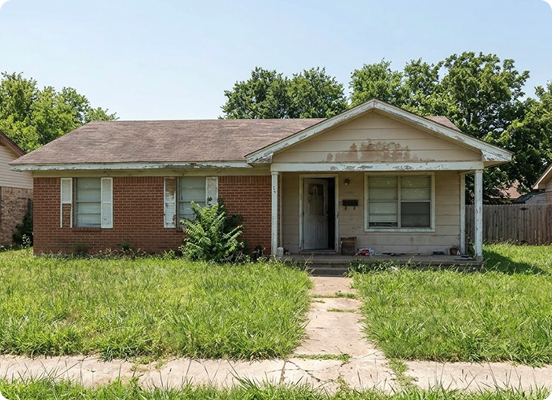
- A vacant house still costs you money every month through taxes, insurance, utilities, upkeep, and other carrying costs.
- Homeowner's insurance coverage can change once a house has been vacant for an extended period, often 30 to 60 days, so check your policy before leaving it empty.
- Don't shut everything off automatically. Keep the systems needed to protect the house running, and consider shutting off the main water supply if appropriate.
- Vacant houses need regular attention to catch weather damage, leaks, break-ins, theft, or unauthorized occupants before the problem gets worse.
- When the cost and risk of keeping the house outweigh what you expect to gain by waiting, compare a traditional sale with a direct cash sale. Cash usually trades some potential sale price for speed, certainty, and fewer steps
What does it cost to leave a house vacant?
The house is empty, but the bills are not. Property taxes and insurance continue. You may still have a mortgage, HOA dues, utilities, lawn care, security, and routine maintenance. And because no one is living there, someone still needs to check the property for leaks, storm damage, break-ins, or other problems.
To see what waiting is actually costing you, add up your monthly carrying costs:
Mortgage + property taxes + insurance + utilities + HOA dues + lawn care + maintenance
Then multiply that number by how many months you expect to keep the house.
That cost matters when you compare waiting for a higher sale price against selling sooner. A higher price later does not necessarily mean more money in your pocket if the house costs thousands of dollars to carry while you wait.
Does homeowner's insurance cover a vacant house?
A standard homeowner's policy may not provide the same coverage once a house has been vacant for an extended period. Many policies have vacancy provisions that limit or exclude certain losses after the property has been empty for a set period, commonly 30 to 60 days.
That can matter if the house is damaged by a break-in, vandalism, a burst pipe, or another problem while no one is living there.
If the house will be vacant, tell your insurance company and ask how your policy defines vacancy and what coverage changes. You may need a vacancy endorsement or a separate vacant home policy.
Protect the house before you shut anything off
Cutting utilities can save money, but shutting down the wrong thing can create a much bigger repair bill.
Keep enough electricity or gas running to protect the house from extreme temperatures. In winter, keep the thermostat at 55 degrees or higher. If the house will sit empty for a while, you may also consider shutting off the main water supply to limit damage from a leak or burst pipe.
If you shut off the water, check what your water heater requires first. Depending on the system, it may need to be placed in vacation mode or have its heat source turned off.
The goal is simple: keep the systems running that protect the house, and shut off only what reduces risk.
How to protect a vacant house from vandalism, theft, and squatters
An empty house can be an easier target for break-ins, vandalism, theft, and unauthorized occupants, especially when it is obvious no one is checking on the property. Copper, appliances, HVAC equipment, and other fixtures can be stolen, while a broken window, roof leak, or other damage may go unnoticed longer than it would in an occupied home.
Make the house look maintained. Keep the yard cut, collect mail and flyers, use timers or exterior lighting, secure doors and windows, and have someone check the property regularly. Cameras or an alarm system can also help you spot a problem sooner.
If someone has already moved into the house without permission, do not assume you can simply change the locks or remove them yourself. Texas has a specific process for removing certain unauthorized occupants, but the rules differ if the person is or was a tenant. Follow the proper removal process rather than trying to handle it yourself. Here is what to do about squatters.
When the house has sat empty long enough
The longer a house sits vacant, the more the decision becomes a tradeoff between what you might gain by waiting and what the property is costing you in the meantime.
Add up what you are spending on taxes, insurance, utilities, upkeep, repairs, and security. Then compare that with what you realistically expect to gain by continuing to hold the property.
There is no single point when every vacant house should be sold. But once the cost and risk of keeping it start outweighing the benefit of waiting, it is worth looking at which way of selling gets you where you need to go.
How to sell a vacant house fast
How quickly a vacant house can sell depends on its condition, whether the title is clear, how easily buyers can access it, and whether the sale depends on financing.
If the house is in good condition and maximizing the sale price matters more than speed, listing it may still make sense. But a traditional sale can mean preparing the property, keeping it ready for showings, negotiating repairs, and waiting for a buyer's financing and appraisal.
If the house needs work or you want to avoid those steps, a direct cash sale can usually move faster. An as-is buyer can account for the condition in the offer instead of requiring you to repair the property first, and a true cash purchase does not depend on mortgage approval. You can read more about selling a house that needs major repairs.
The tradeoff is price. Selling directly for cash usually means accepting less than you might get from a successful retail sale in exchange for speed, certainty, and fewer steps.
With Big State, local market expertise is backed by a national network of 250,000 vetted buyers. That gives us more buying power to make a competitive as-is offer without losing the local knowledge needed to find the most value in your property.
TALK TO US
When you’re ready to talk, start here.
You don't have to have everything figured out before you call. If you're in Houston or DFW and want to know what a cash sale looks like for you, let's talk.
You're not committing to anything. You're just getting clarity.
or call888-981-9143