How to sell inherited property with multiple owners
Selling inherited property with multiple owners gets more complicated when people disagree about the price, timing, or whether to sell at all.
This guide explains your main options in Texas: buying out another owner, selling together and dividing the proceeds, and what can happen when a co-owner asks the court for a partition.
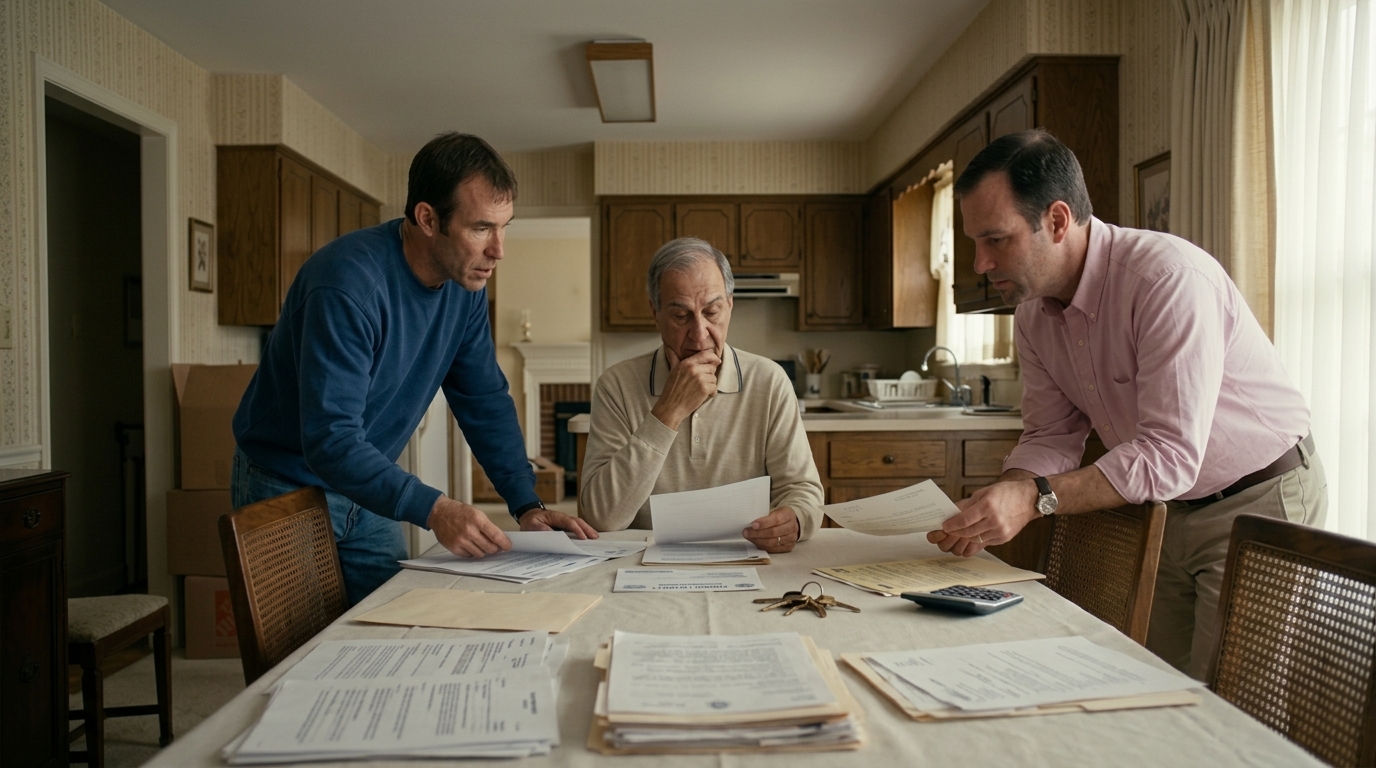
- When multiple people inherit a house in Texas, who can sell depends on who owns the property and whether an executor or administrator still has authority over the estate.
- If several people already own the property together, a voluntary sale of the whole house generally requires all ownership interests to be conveyed.
- The main options are to buy out another owner, sell the property together and divide the proceeds, or ask a court for partition if agreement breaks down.
- A partition case does not automatically mean an immediate forced sale. For qualifying heirs’ property, Texas law can give other co-owners a chance to buy out the person seeking partition before the property is sold.
- Big State can help coordinate heirs, clear title issues, and keep the sale moving when owners are willing to work toward a solution. If someone refuses to sell, that dispute may need to be resolved first.
What it means to inherit a house with multiple owners
How multiple ownership happens depends first on whether there was a will.
If there was a valid will, the will generally determines who receives the property. If the estate is still being administered, an executor may also have authority to sell the property before it is distributed, depending on the will and the type of administration. Texas Estates Code §101.001 governs how property passes under a lawful will.
If there was no will, Texas intestate succession law determines who inherits. That can result in several family members owning interests in the same property, especially when the house has passed through more than one generation.
Once multiple people actually own interests in the property, they generally hold those interests together rather than owning separate physical pieces of the house. That is where decisions about buyouts, a shared sale, or partition become relevant.
Do all heirs have to agree to sell inherited property?
Not always. If several people already own interests in the property, a voluntary sale of the entire property generally requires all of those ownership interests to be conveyed.
But if the property is still part of an estate, an executor or administrator may have authority to sell it without every beneficiary signing individually. For example, Texas Estates Code §402.052 gives certain independent executors and administrators authority to sell estate property without separate court approval, unless that authority is limited.
If the property has already passed to multiple owners and one person refuses to participate, the others generally cannot complete a normal sale of the entire house without resolving that ownership interest. At that point, the options may include a buyout, negotiation, or a partition action.
Option 1: Buy out the other owners
If one owner wants to keep the house and the others want their share in cash, they can agree on a buyout.
The first challenge is usually deciding what the property is worth. An appraisal, market analysis, or other agreed valuation can give everyone a starting point. From there, each owner’s share can be calculated based on their ownership interest.
The person keeping the house also needs enough cash or financing to complete the buyout, and the ownership interests being purchased must be properly transferred.
A buyout works best when everyone agrees on the value and the person keeping the property can afford to make the others whole.
Option 2: Sell the property and divide the proceeds
If the owners agree that no one wants to keep the house, they can sell it and divide the net proceeds according to their ownership interests.
If the property is still being handled through an estate, the sale may instead be completed by an executor or administrator with authority to sell, and the proceeds distributed through the estate. Texas Estates Code §402.052 addresses the power of certain independent executors and administrators to sell estate property.
A direct sale can make this option simpler when the house needs repairs, heirs live in different places, or title issues still need to be resolved. There is no need to prepare the property for a traditional listing, and an experienced buyer can work with the title company to coordinate signatures and outstanding title requirements.
For families who agree on selling but do not want another project to manage, this can be the cleanest path to a shared exit.
Option 3: Ask the court for a partition
If the owners cannot agree, a co-owner can ask a Texas court to partition the property.
A partition case does not automatically mean the house goes straight to auction. Depending on the property and ownership structure, the court may consider whether the property can be divided, whether another owner can buy out the person seeking a sale, or whether the property ultimately needs to be sold.
For property that qualifies as heirs’ property, Texas Property Code Chapter 23A provides additional protections. For example, when one co-owner asks for a partition by sale, other qualifying co-owners may have an opportunity to buy that person’s interest before the case proceeds toward a court-ordered sale. Texas Property Code §23A.007
Partition gives a co-owner a legal path forward when agreement breaks down, but it also gives up much of the family’s control over how the problem gets resolved.
Seller story: A way to agree before going to court
SELLING WITH BIG STATE
Allen and Richard inherited their family home with their sister Kathy, who was living there and did not want to sell. The brothers wanted out, and partition was one option available to them.
Instead, our advisor worked with all three to find a sale they could agree on. Allen and Richard accepted smaller shares of the proceeds so Kathy could receive more and make the move workable for her.
It was not a perfect outcome for anyone, but the family kept the decision in their hands instead of asking a court to make it for them.
The family kept control of the outcome instead of handing the decision to a court.
We could have taken her to court, but almost all of the time, that does way more harm than good.
Can a sibling force the sale of inherited property?
A sibling cannot force the other owners to agree to a voluntary sale. But a co-owner can ask a Texas court to partition the property, which may ultimately result in a court-ordered sale.
For qualifying heirs’ property, the other co-owners may have an opportunity to buy out the person asking for the sale before the case moves further. The court may also consider whether the property can reasonably be divided instead of sold. Texas Property Code Chapter 23A governs those protections.
That is why a negotiated buyout or shared sale is often worth exploring first. Once a partition case begins, the family gives up some control over how the property issue gets resolved.
When there’s still a path to agreement
If an owner is firmly opposed to selling, a voluntary sale might not be possible until the disagreement is resolved.
But when the people involved are reachable and willing to find a solution, you don't have to manage all of the moving pieces on your own. Big State can help coordinate the heirs, work through the title, and keep the sale moving toward a closing everyone understands.
TALK TO US
When you’re ready to talk, start here.
You don't have to have everything figured out before you call. If you're in Houston or DFW and want to know what a cash sale looks like for you, let's talk.
You're not committing to anything. You're just getting clarity.
or call888-981-9143